Carbohydrates and Energy Metabolism
Understanding carbohydrate types, their metabolism, and their central role in energy production
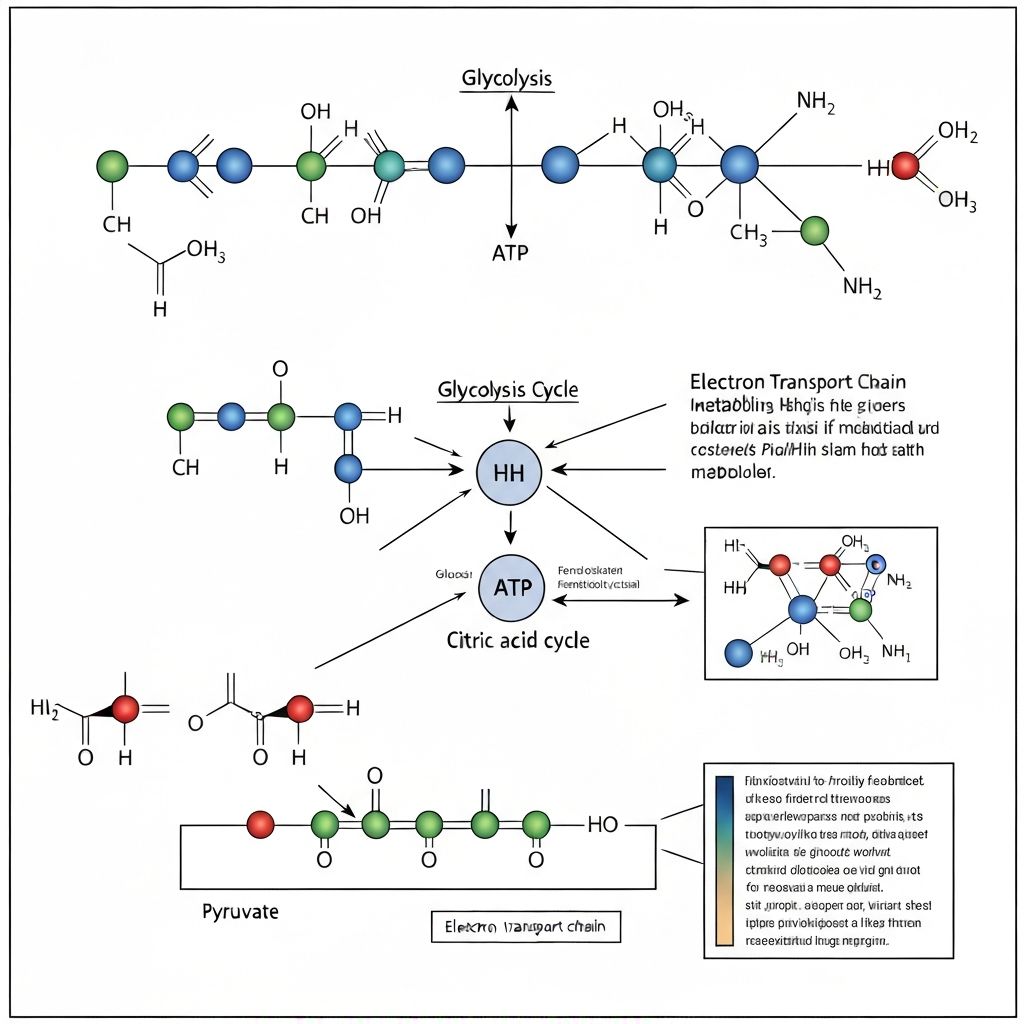
Carbohydrates are metabolized to provide primary energy for cells
Introduction
Carbohydrates are one of the three primary macronutrients and serve as the body's preferred energy source. While sometimes maligned in popular diet trends, carbohydrates are essential for optimal brain function, athletic performance, and overall physiological regulation. Understanding carbohydrate types and metabolism is fundamental to nutritional science.
Carbohydrate Structure and Types
Carbohydrates are organic compounds composed of carbon, hydrogen, and oxygen atoms. They range in complexity from simple monosaccharides to complex polysaccharides.
Monosaccharides (Simple Sugars)
Single sugar molecules that are the basic unit of carbohydrates:
Glucose
Found in: Grapes, honey, table sugar (when combined with fructose)
Role: Primary energy source for cells; tightly regulated in bloodstream by insulin
Fructose
Found in: Fruits, honey, high-fructose corn syrup
Role: Metabolized primarily in liver; sweetness perception differs from glucose
Galactose
Found in: Lactose (milk sugar, when hydrolyzed)
Role: Converted to glucose for metabolism; component of glycoproteins
Disaccharides (Double Sugars)
Two monosaccharides joined by a glycosidic bond:
- Sucrose (glucose + fructose) – Table sugar, found in fruits, vegetables
- Lactose (glucose + galactose) – Milk sugar; requires lactase enzyme for digestion
- Maltose (glucose + glucose) – Produced during starch digestion; found in grains
Polysaccharides (Complex Carbohydrates)
Starch
Structure: Long chains of glucose units
Found in: Grains, legumes, potatoes, vegetables
Function: Primary energy storage carbohydrate in plants; digested to glucose in human intestines
Glycogen
Structure: Branched polymer of glucose
Location: Stored in liver (100-120g) and muscles (400-500g); animal equivalent of plant starch
Function: Rapidly mobilized glucose during fasting or exercise
Fiber
Structure: Polysaccharides that humans cannot digest
Types: Soluble fiber (slows digestion) and insoluble fiber (promotes intestinal movement)
Functions: Promotes healthy digestion, stabilizes blood glucose, feeds beneficial gut bacteria
Carbohydrate Digestion and Absorption
Carbohydrate digestion begins in the mouth with salivary amylase and continues through the stomach and small intestine:
Digestion Process
- Mouth: Salivary amylase begins starch breakdown
- Stomach: Digestion slows due to acidic environment
- Small Intestine: Pancreatic amylase and brush border enzymes complete hydrolysis to monosaccharides
- Absorption: Glucose and galactose absorbed via active transport; fructose via facilitated diffusion
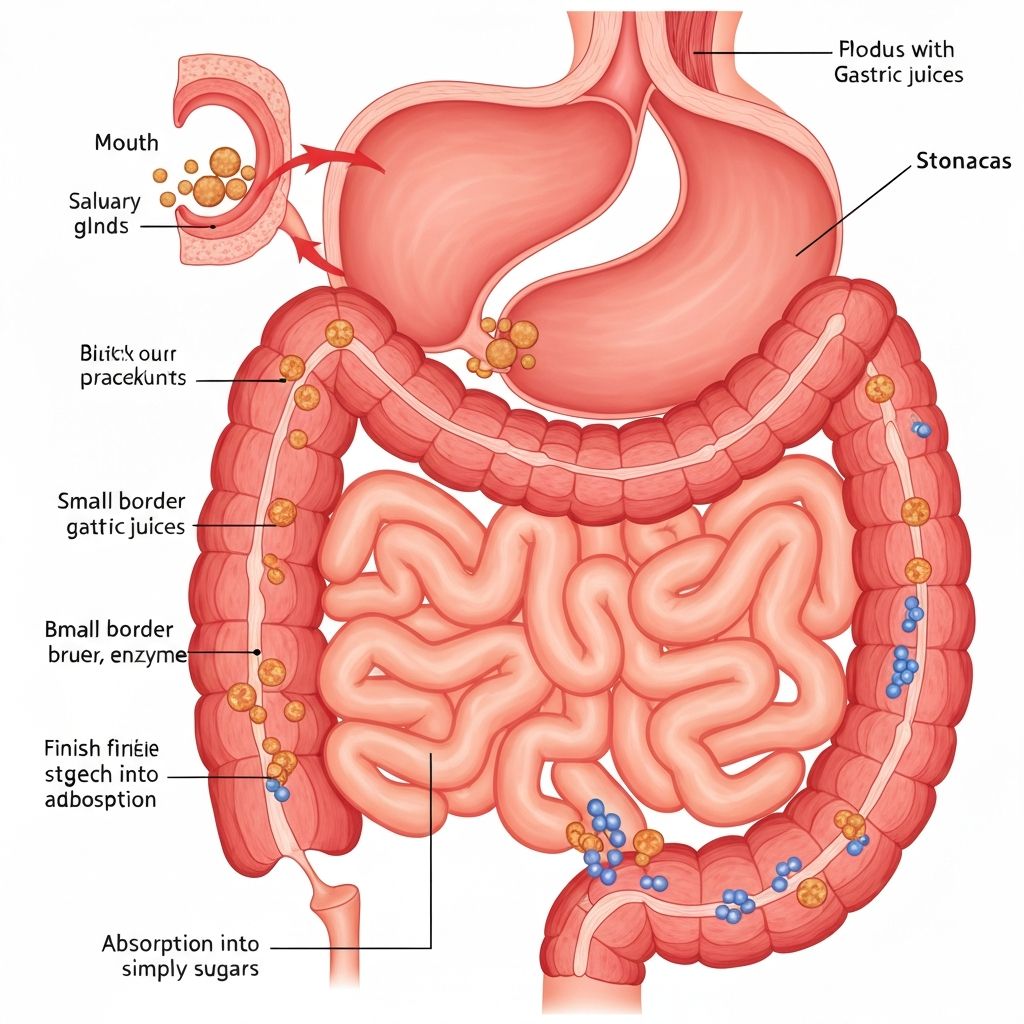
Carbohydrate digestion yields glucose for cellular energy
Glucose Metabolism and Energy Production
Cellular Respiration
Once absorbed as glucose, carbohydrates undergo cellular respiration to produce ATP (adenosine triphosphate), the energy currency of cells:
- Glycolysis: Glucose broken into pyruvate in cytoplasm; produces 2 ATP (anaerobic)
- Citric Acid Cycle: Pyruvate converted to Acetyl-CoA; generates NADH and FADH₂ (aerobic)
- Electron Transport Chain: NADH and FADH₂ oxidized; produces approximately 30-32 ATP per glucose
Blood Glucose Regulation
Blood glucose must be maintained within narrow ranges (70-100 mg/dL fasting) for optimal brain function and metabolic stability. This is achieved through:
Insulin (Fed State)
Released by pancreatic beta cells when blood glucose rises; promotes glucose uptake into cells and glycogen synthesis
Glucagon (Fasted State)
Released when blood glucose drops; promotes glycogenolysis and gluconeogenesis to maintain glucose availability
Simple vs. Complex Carbohydrates
The distinction between simple and complex carbohydrates relates to structure, digestion rate, and metabolic effects:
Simple Carbohydrates
Examples: Sugar, white bread, fruit juice, candy
Absorption: Rapid; cause rapid blood glucose increase
Satiety: Low; minimal fiber, protein, or fat to promote fullness
Context: Acceptable around exercise or when glucose availability is desired
Consider: Often consumed in excess and associated with metabolic dysfunction when overconsumed
Complex Carbohydrates
Examples: Whole grains, legumes, vegetables, oats
Absorption: Slower; sustained glucose availability
Satiety: Higher; contain fiber and often paired with protein/fat
Nutrients: Often contain vitamins, minerals, phytonutrients
Recommendation: Primary source of carbohydrate intake for metabolic health
Glycemic Index and Glycemic Load
Glycemic Index (GI)
Measure of how rapidly a carbohydrate food raises blood glucose relative to pure glucose (GI = 100).
- High GI (≥70): White bread, sugary drinks, refined cereals
- Medium GI (56-69): Whole wheat bread, basmati rice
- Low GI (≤55): Legumes, most fruits and vegetables, steel-cut oats
Glycemic Load (GL)
Combines GI with portion size: GL = GI × grams of carbohydrate per serving ÷ 100
Provides more practical measure of blood glucose impact than GI alone
Carbohydrate Requirements
Optimal carbohydrate intake depends on activity level, fitness goals, and individual metabolic characteristics:
Sedentary Adults
45-65% of total calories; approximately 225-325g/day for 2000 calorie diet
Moderate Activity
50-55% of calories; adjust higher with increased training
Endurance Athletes
6-10 g per kg bodyweight daily; emphasis on adequate carbohydrate for training capacity
Resistance Training
4-7 g per kg bodyweight; sufficient for muscle glycogen repletion
Conclusion
Carbohydrates are the body's preferred energy source and essential for optimal brain function and athletic performance. Rather than classifying carbohydrates as universally "good" or "bad," understanding their structure, digestion rates, and metabolic effects allows for informed dietary choices. Prioritizing complex carbohydrates from whole foods, with adequate fiber and nutrient content, while moderating refined simple carbohydrates, supports optimal metabolic health and physiological function.
Key Takeaway: Carbohydrates are essential macronutrients that provide energy for cellular function. Focus on whole food sources like whole grains, legumes, and vegetables, which provide additional nutritional benefits alongside glucose energy.
Related Articles
Understanding Proteins and Amino Acids
Learn about the second macronutrient for complete nutritional understanding.
Dietary Fats: Essential for Health
Explore the third macronutrient and complete the macronutrient picture.